How to Clean Wooden Spoons—and When to Replace Them
October 15, 2026 · By Lonivera
Keep wooden spoons clean, smooth, and ready for everyday cooking. Learn the right washing routine, safe oiling habits, and signs it’s time for a replacement.
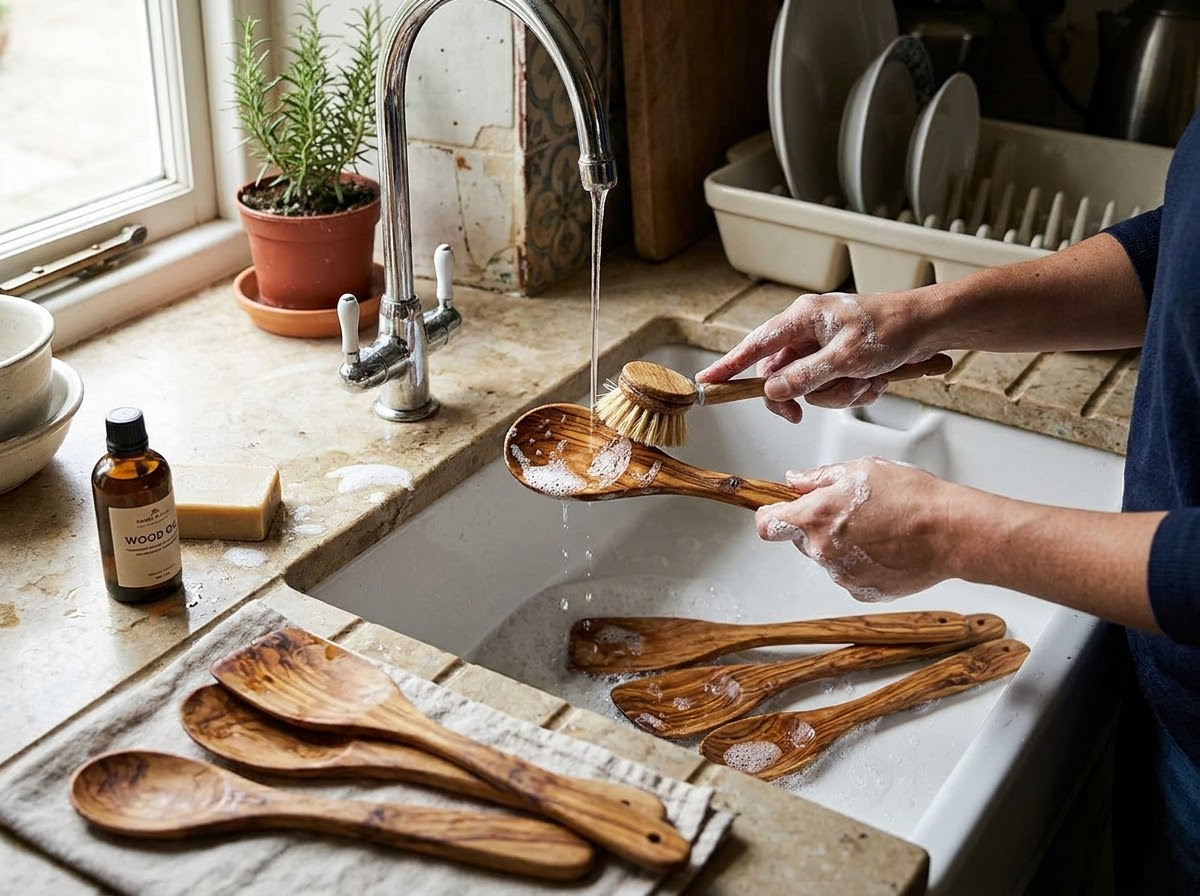
A wooden spoon can become one of the most familiar tools in your kitchen, stirring everything from morning oatmeal to a slow-simmered sauce. Learning how to clean wooden spoons is mostly about simple habits: wash gently, dry thoroughly, and check for damage before putting them back to work.
How to clean wooden spoons after everyday cooking
Wooden spoons need a thorough hand wash, not a complicated cleaning ritual. Warm water, mild dish soap, and a soft sponge or brush are enough for routine cleaning after ordinary kitchen use.
Start soon after cooking, before food dries onto the surface. If you cannot wash the spoon immediately, scrape off excess food and set it aside rather than leaving it in a sink full of water.
Follow these steps:
- Remove food residue. Gently scrape or wipe away anything clinging to the bowl, edges, or handle.
- Wash with warm, soapy water. Clean the entire spoon, including the neck and any carved details where food might collect.
- Rinse thoroughly. Use clean running water to remove soap and loosened food.
- Towel-dry immediately. Wipe away surface moisture with a clean dish towel.
- Finish drying in open air. Place the spoon where air can circulate around it before storing it.
For stubborn bits, hold the affected area briefly under warm running water and work gently with a soft brush. Avoid prolonged soaking, even when dried oatmeal or sauce makes it tempting.
This routine also suits the utensils in an Olive Wood Spoons & Spatulas Set. Pay particular attention to spatula edges and the junction between each utensil’s handle and working end.
What to avoid when washing wooden utensils
The biggest cleaning mistakes usually involve too much water, too much heat, or unnecessarily aggressive treatment.
Skip the dishwasher and soaking
Dishwashers combine prolonged moisture, heat, and strong detergents. That treatment can leave wood rough, warped, or cracked. Hand washing gives you control over both the cleaning and the drying process.
A long soak is no better. Do not leave wooden spoons submerged overnight, sitting in a pot of water, or resting in a wet sink between meals.
Do not boil wooden spoons
Boiling is sometimes presented as a way to reveal hidden dirt. But colored water is not a reliable cleanliness test: food residue, oils, and compounds from the wood can all affect its appearance.
More importantly, boiling exposes a spoon to sustained heat and water that can damage it. Stick to regular hand washing rather than trying to “deep clean” wood in a saucepan.
Avoid harsh scrubbing
Steel wool and aggressive scouring can damage the surface and create rough areas that are harder to clean. Use a soft sponge or brush, and do not rely on strong household cleaners or improvised chemical mixtures for routine utensil care.
Handling stains, smells, and food-safety concerns
A spoon that has stirred tomato sauce, turmeric, or berries may retain some color after washing. A flat stain on otherwise smooth, sound wood does not automatically mean the utensil needs replacing.
Wash it normally and let it dry completely before assessing it. Repeated harsh cleaning to remove every trace of color can do more harm than the stain itself.
Odors deserve closer attention. If a spoon smells of garlic or spices, wash it thoroughly again, rinse well, and allow plenty of airflow during drying. Check the neck and edges for overlooked food residue.
If an unpleasant smell persists after washing and complete drying, stop using the spoon for food preparation. A musty smell, visible mold, or residue lodged inside a crack is a reason to replace it rather than cover the problem with oil.
Keep raw-food handling separate
After contact with raw meat, poultry, seafood, or eggs, clean utensils promptly and prevent them from touching ready-to-eat foods before washing. Ordinary washing should not be described as sterilizing.
If a utensil needs sanitizing, follow its maker’s instructions and applicable food-safety guidance. For tasks requiring frequent sanitizing, consider a utensil material that tolerates an approved sanitizing method more readily.
Drying, oiling, and storing wooden spoons
Drying is part of cleaning, not an optional finishing step. Even a freshly washed spoon should not go straight into a crowded drawer or a utensil crock while damp.
After towel-drying, lay it on a clean rack with airflow around it. Avoid leaving the bowl against a wet countertop or placing it near intense heat to speed things up. Store it only when fully dry.
Oil when the surface looks dry
Wood that looks dull or feels dry may benefit from a light application of food-safe oil intended for wooden kitchenware. Food-grade mineral oil is a common choice; follow any care instructions supplied with the utensil.
Apply a thin coat to clean, completely dry wood with a clean cloth. Allow it to absorb according to the oil’s directions, then wipe away any excess before use or storage.
Avoid ordinary cooking oils such as olive oil, which can become rancid. Oiling helps condition the surface, but it does not disinfect the spoon, seal a crack, or repair damaged wood.
The same hand-wash, dry, and oil principles generally apply to an olive wood serving board, though each piece’s care instructions should take priority.
When to replace wooden spoons
There is no universal replacement schedule. Condition matters more than age, and a quick inspection while washing is more useful than counting months.
Replace a wooden spoon if you notice:
- Cracks or splits, especially around the bowl or neck, where food and moisture can collect.
- Splinters or flaking wood that could come loose during cooking.
- Visible mold or a persistent musty smell after cleaning and drying.
- Deep grooves or damaged areas that you cannot clean thoroughly.
- A weakened or badly warped shape that makes stirring unreliable.
Normal changes in color and sheen are different from structural damage. A sound spoon may simply need washing, thorough drying, and appropriate oiling. A cracked spoon needs replacement, not another coat of oil.
Frequently asked questions
Can you wash wooden spoons with dish soap?
Yes. Mild dish soap and warm water are appropriate for routine hand washing. Rinse thoroughly, towel-dry, and let the spoon finish drying in open air before storing it.
How often should you oil wooden spoons?
Oil them when clean, dry wood starts looking dull or feeling dry, rather than following a rigid calendar. Use food-safe oil intended for wooden kitchenware and wipe away excess.
Does a stained wooden spoon need replacing?
Not necessarily. A smooth, intact spoon with a food stain may still be usable. Replace it if discoloration comes with mold, persistent unpleasant odor, cracks, or other damage.
Ready to replace a worn utensil? Explore Lonivera’s Olive Wood Spoons & Spatulas Set for your everyday cooking routine.