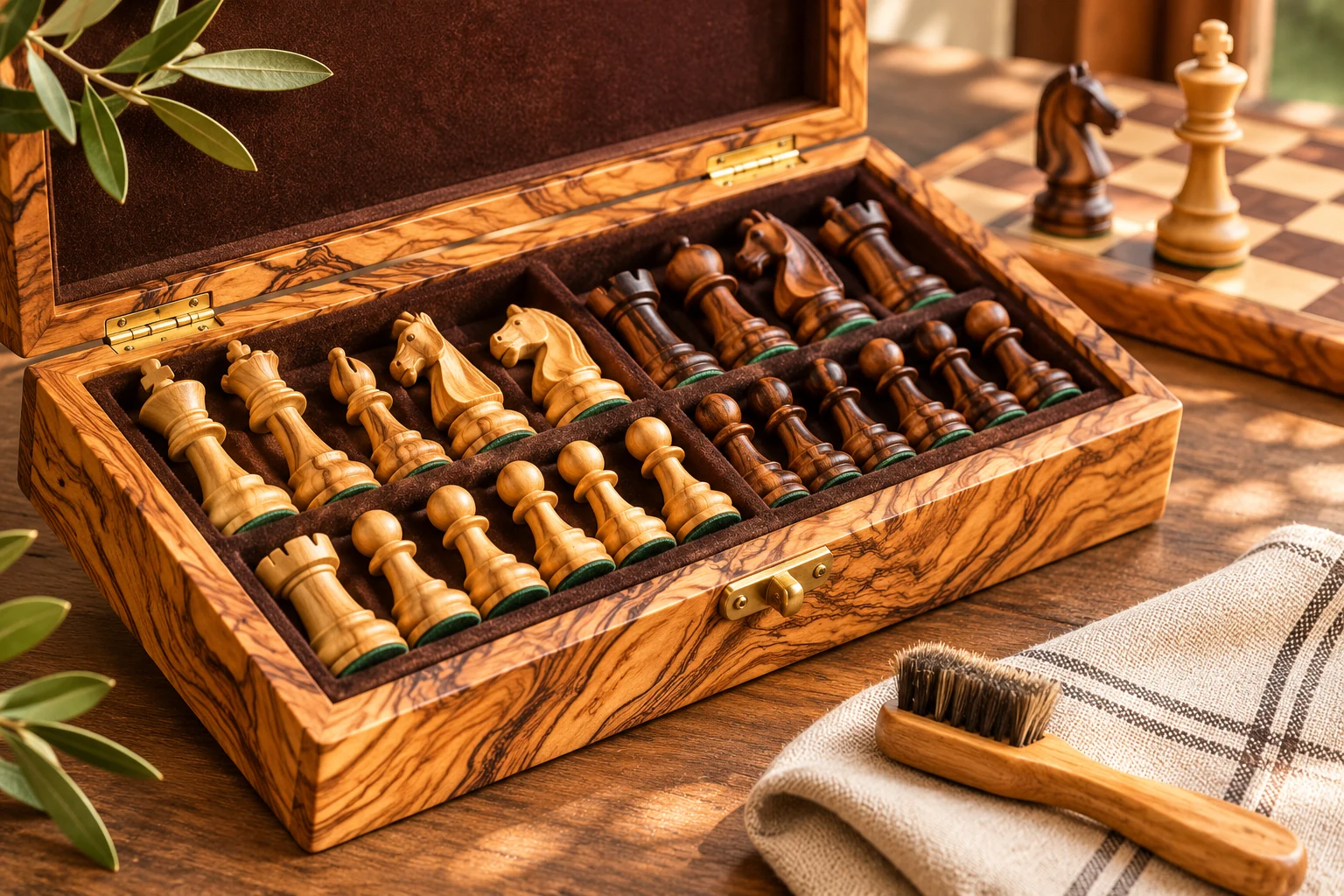
Wooden Chess Piece Storage: A Practical Care Guide
November 14, 2026 · By Lonivera
Keep wooden chess pieces protected between games with simple storage, gentle cleaning, and a few habits that help prevent scratches and moisture damage.
Good wooden chess piece storage protects more than a polished surface: it keeps slender details, felt bases, and carefully shaped edges ready for the next game. You do not need an elaborate case, but you do need a clean, dry place where pieces will not knock together or sit under pressure.
Why Wooden Chess Pieces Need Thoughtful Storage
Wood responds to changes in moisture and temperature. Storing a chess set in a damp basement, beside a heater, or on a sunny windowsill can expose it to conditions that may contribute to movement, cracking, or changes in its finish.
Physical damage matters, too. A king’s finial or a bishop’s narrow top can be vulnerable when pieces are tossed into a drawer. Even sturdy pawns can pick up surface marks when they rub against other pieces during transport.
The goal is straightforward: keep the environment reasonably stable, cushion contact points, and avoid crowding. These principles apply to olive wood as well as other woods used for chess pieces.
For a set you play with regularly, convenient storage is especially important. A system that takes only a moment to use is more likely to become part of your after-game routine.
Choosing Wooden Chess Piece Storage That Works
The best container depends on how often you play and whether the set stays at home or travels. Start by checking the tallest and widest pieces rather than assuming any chess box will fit.
A lined box with separate compartments
Individual compartments help prevent pieces from colliding. Choose smooth, soft lining and enough space to lift each piece without catching delicate details on a divider.
A lid should close freely. If you need to push it down, the container is too shallow or the pieces need rearranging. Never let the lid bear against the tops of the kings or queens.
A padded tray inside a drawer
For frequent games, a dedicated drawer with a divided, padded tray can be an easy option. Keep keys, pens, and other hard objects out of the same space.
Pieces can stand upright if the drawer is deep enough and opens smoothly. Otherwise, lay them in individual padded sections, supporting the body rather than placing pressure on a narrow neck or decorative top.
Individual pouches for occasional travel
Soft individual pouches can reduce rubbing, but they work best inside a protective outer box. A single shared bag offers little separation, especially when carried in a backpack.
Use this checklist when choosing storage:
- Enough clearance for the tallest piece and its base.
- Soft, clean padding that does not shed or feel abrasive.
- Separate spaces or individual wraps to prevent collisions.
- A secure closure that does not squeeze the contents.
- Easy access, so pieces can be lifted rather than pulled out by their tops.
Avoid tightly fitted inserts that grip delicate details or leave you tugging at the pieces.
Clean and Dry Pieces Before Putting Them Away
Most chess pieces need dusting, not washing. After a game, use a soft, dry cloth to remove fingerprints and loose dust. A clean, soft brush can help reach carved areas without scraping them.
If a mark needs more attention, follow the maker’s care instructions. Where the finish allows it, gently wipe the affected area by hand with a barely damp cloth, then dry it promptly. Do not immerse pieces, soak them, or put them in a dishwasher.
Take extra care around felt bases, joints, and any glued details. Moisture can linger in these areas even when the exposed wood feels dry. Leave pieces out until they are fully dry before closing them in a storage box.
Should you oil wooden chess pieces?
Not every wooden chess set needs oil. Some pieces have a sealed finish, and applying oil may leave residue without benefiting the wood.
If the maker recommends oiling, use a food-safe oil suitable for the wood and finish, such as food-grade mineral oil when appropriate. Apply sparingly as directed and wipe away excess. Keep oil away from felt and adhesive areas, and do not pack pieces while their surfaces feel oily.
Avoid ordinary cooking oils, which can become rancid. When the finish is unknown, ask the seller before adding any treatment.
Find a Stable Home for the Set
An interior cabinet or drawer in a regularly used room is usually a better choice than a garage, attic, or damp basement. Keep the storage spot away from radiators, fireplaces, air vents, and direct sunlight.
You do not need to chase a precise humidity number for everyday storage. Focus on avoiding persistent dampness and large, repeated environmental swings. If a cabinet smells musty or shows condensation, choose another location rather than relying on a closed box to solve the problem.
Leaving pieces on display
Keeping a chess set arranged on its board is reasonable when the location is protected. Choose a stable surface away from spills, busy edges, pets, and small children who might knock pieces over.
Dust regularly and move the set if sunlight falls across it for long periods. A display cover can help with dust, provided it does not touch the pieces or enclose moisture.
The Handmade Olive Wood Chess Set – Live Edge Board can be part of a welcoming game corner. Whether you display it or pack it away, choose the location for protection as well as appearance.
Build a Simple After-Game Routine
A repeatable routine makes care easy without turning every game into a maintenance project.
First, gather and count the pieces so a stray pawn does not end up under a chair. Give each piece a quick look for dust, moisture, or a loose base covering. Address any spill before packing anything away.
Next, place pieces into their assigned spaces. Lift them around their sturdier bodies rather than by slender tops. Check that no piece rests against another and that the lid closes without resistance.
Store the board separately if the container was not designed to hold both. Do not use the pieces as supports beneath a board or stack heavy items on their storage box.
For travel, gently tilt the closed case before leaving. If you hear pieces shifting or knocking together, improve the separation and padding. The aim is to limit movement without compressing delicate shapes.
Frequently Asked Questions
Can I store all my wooden chess pieces in one bag?
You can, but a shared bag provides little protection against rubbing and impacts. Individual soft pouches inside a sturdy box are a better option for transport. At home, a divided tray or lined compartment box makes separation easier.
Is an airtight plastic container safe for wooden chess pieces?
A clean plastic container can work if the pieces and padding are completely dry and individually protected. The main concern is trapping moisture. Avoid packing freshly wiped or oiled pieces, and keep the container somewhere with stable indoor conditions.
Should wooden chess pieces stand upright or lie flat?
Either position can work. Upright pieces need secure bases and enough lid clearance; pieces laid flat need soft support and separation. Choose the arrangement that prevents movement and puts no pressure on narrow or decorative details.
Ready to make room for your next game? Explore Lonivera’s Handmade Olive Wood Chess Set – Live Edge Board and give it a protected place between matches.