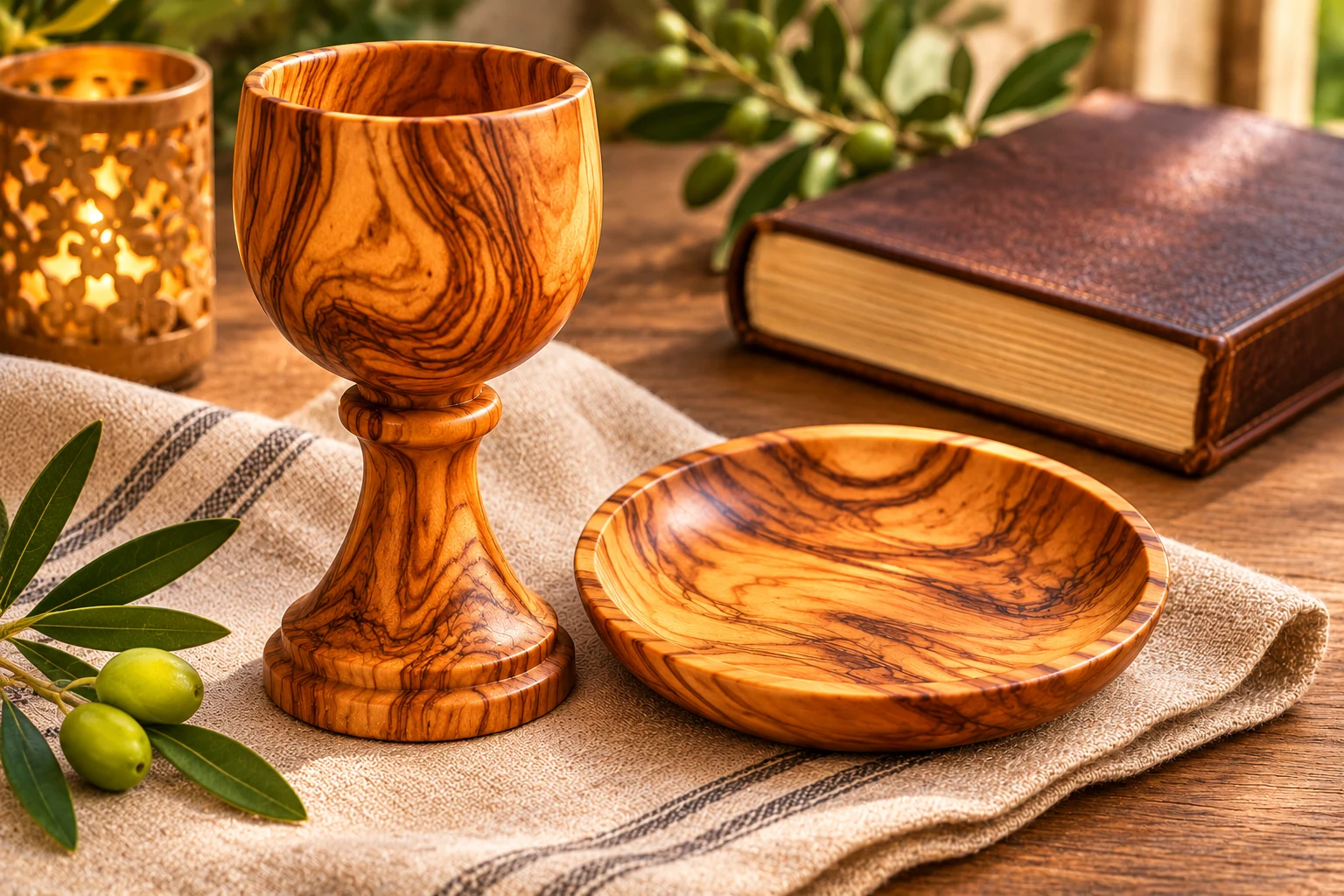
Ordination Gift Ideas: Choosing a Wooden Chalice and Paten
November 14, 2026 · By Lonivera
A wooden chalice and paten can be a meaningful ordination keepsake. Learn when this gift fits, what to ask first, and when to choose something for everyday life.
Finding meaningful ordination gift ideas starts with understanding the person, their tradition, and the life of service they are entering. A handmade wooden chalice and paten may feel especially fitting, but choosing one requires a clear distinction between a commemorative gift and vessels approved for worship.
Ordination Gift Ideas That Honor the Person and the Calling
Ordination marks a significant commitment, often supported by years of study, discernment, and community life. A thoughtful gift can acknowledge that journey without needing to be elaborate or intended for use at the altar.
Start with the recipient rather than the object. Would they appreciate a visible reminder of their ordination, something useful for welcoming guests, or a gift that supports rest and friendship outside their ministry?
Their particular role matters, too. Ordination to the diaconate, priesthood, or another form of ministry does not carry identical responsibilities across Christian traditions. A chalice may hold deep symbolic meaning for someone without being something they will personally use in their liturgical role.
A helpful first question is: “Would you prefer something to commemorate your ordination, something for church use, or something for your home?” That leaves room for an honest answer and avoids making a beautiful gift into an obligation.
When a Wooden Chalice and Paten Makes Sense
A chalice is the cup associated with Eucharistic or Communion celebrations, while a paten is the plate used for the bread. Together, their forms can evoke worship, service, and the gathering of a Christian community.
A wooden set is worth considering when the recipient appreciates natural materials and has expressed interest in a commemorative piece. Olive wood brings distinctive grain and warm tones, giving a handmade object visual character without needing elaborate decoration.
Lonivera’s Chalice and Paten Set Handmade from Olive Wood is an option to consider with that distinction in mind. The product’s name and material alone do not establish approval for liturgical use or suitability for holding Communion wine.
Choose it with a clear purpose
A commemorative set may suit someone who wants a reminder of their calling in a study or another appropriate personal space. It should be offered explicitly as a keepsake unless its intended use has been confirmed.
Olive trees also have rich biblical associations, which may make olive wood personally meaningful. That symbolism, however, does not establish a product’s geographic origin, blessing, or religious approval. Let the material’s beauty and the recipient’s own connection to it carry the meaning.
Check Church Requirements Before Choosing Sacred Vessels
The most important step is to ask before buying anything intended for sacramental use. Requirements differ among denominations, and local preferences do not necessarily override formal church rules.
In the Roman Catholic Church, sacred vessels are subject to specific requirements concerning materials and suitability. Chalice cups must be made from material that does not absorb liquids; an ordinary wooden cup should not be assumed acceptable for Mass. Rules for patens and other vessels are not identical to those for chalice cups, so treating a wooden set as automatically approved would be misleading.
Other Christian traditions may have different requirements. Consult the recipient and the appropriate parish, diocesan, or denominational authority rather than relying on a retailer’s description.
Before purchasing, clarify:
- Intended purpose: Is the gift for commemoration, display, or actual worship?
- Church requirements: What materials and vessel forms are permitted?
- Recipient preference: Do they want a set, or do they already have one?
- Product suitability: What does the maker confirm about the finish, liquid contact, and care?
- Practical responsibility: Who would prepare, clean, and store it if its use were approved?
Approval for worship and suitability for food or liquid contact are separate questions. Neither should be inferred from appearance. If either remains unresolved, choose a clearly non-liturgical gift instead.
Everyday Olive-Wood Gifts Can Be Just as Thoughtful
Not every ordination present needs to be a religious object. Something for everyday hospitality can acknowledge the person behind the ministry and remain useful long after the ceremony.
For someone who enjoys hosting, a Rustic Olive Wood Serving Board offers a natural connection to sharing food and welcoming others. It can accompany a handwritten note about the generosity you have seen in the recipient, without suggesting that it belongs in a worship setting.
For a recipient who enjoys quiet competition and conversation, a Handmade Olive Wood Chess Set – Live Edge Board takes a different approach. A chess set can support time with friends and a welcome change of pace outside church responsibilities.
The best alternative is not necessarily the most symbolic one. Consider whether the recipient cooks, entertains, plays games, or is preparing to move into a smaller home. A well-chosen personal gift can communicate attentiveness more clearly than an object selected only because it looks religious.
If several friends are giving together, coordinate first. One wanted gift and a collection of personal messages may be more meaningful than several similar keepsakes.
Present the Gift Thoughtfully and Explain Its Care
A short handwritten letter can make an ordination gift feel deeply personal. Mention a quality you admire, recall a moment from the recipient’s journey, or offer a simple wish for their ministry.
When giving a wooden chalice and paten as a keepsake, describe it that way. Wording such as “A reminder of your ordination and the community supporting you” is warm without implying permission to use it sacramentally.
For ordinary olive-wood kitchenware, standard care is straightforward: hand wash briefly with mild soap, dry promptly, and never soak it or put it in the dishwasher. When recommended for the item’s finish, apply a light coat of food-safe mineral oil or another food-safe wood-conditioning oil.
For a chalice and paten, follow the maker’s specific instructions rather than assuming kitchenware care is sufficient. Do not add oil to an interior finish without confirmation that it is appropriate. Any vessel approved for sacred use also requires the cleaning and handling practices of the recipient’s church.
Frequently Asked Questions
Is a wooden chalice appropriate as an ordination gift?
It can be, especially when the recipient wants a commemorative piece and appreciates olive wood. Confirm that purpose beforehand. A meaningful keepsake is not automatically a vessel suitable or permitted for Communion.
Can a wooden chalice and paten be used at Mass?
Do not assume so. Catholic requirements distinguish between vessel types, and chalice cups must not absorb liquids. Ask the appropriate church authority about the specific item before buying it for Mass; a retailer’s description is not liturgical approval.
What should I give if I am unsure about religious vessels?
Choose something connected to the recipient’s daily interests, such as a serving board or a chess set, and include a personal letter. Alternatively, ask whether there is a particular item they need rather than trying to preserve the surprise.
If a commemorative wooden set feels right for the recipient, explore Lonivera’s olive-wood chalice and paten and confirm its intended purpose before choosing.