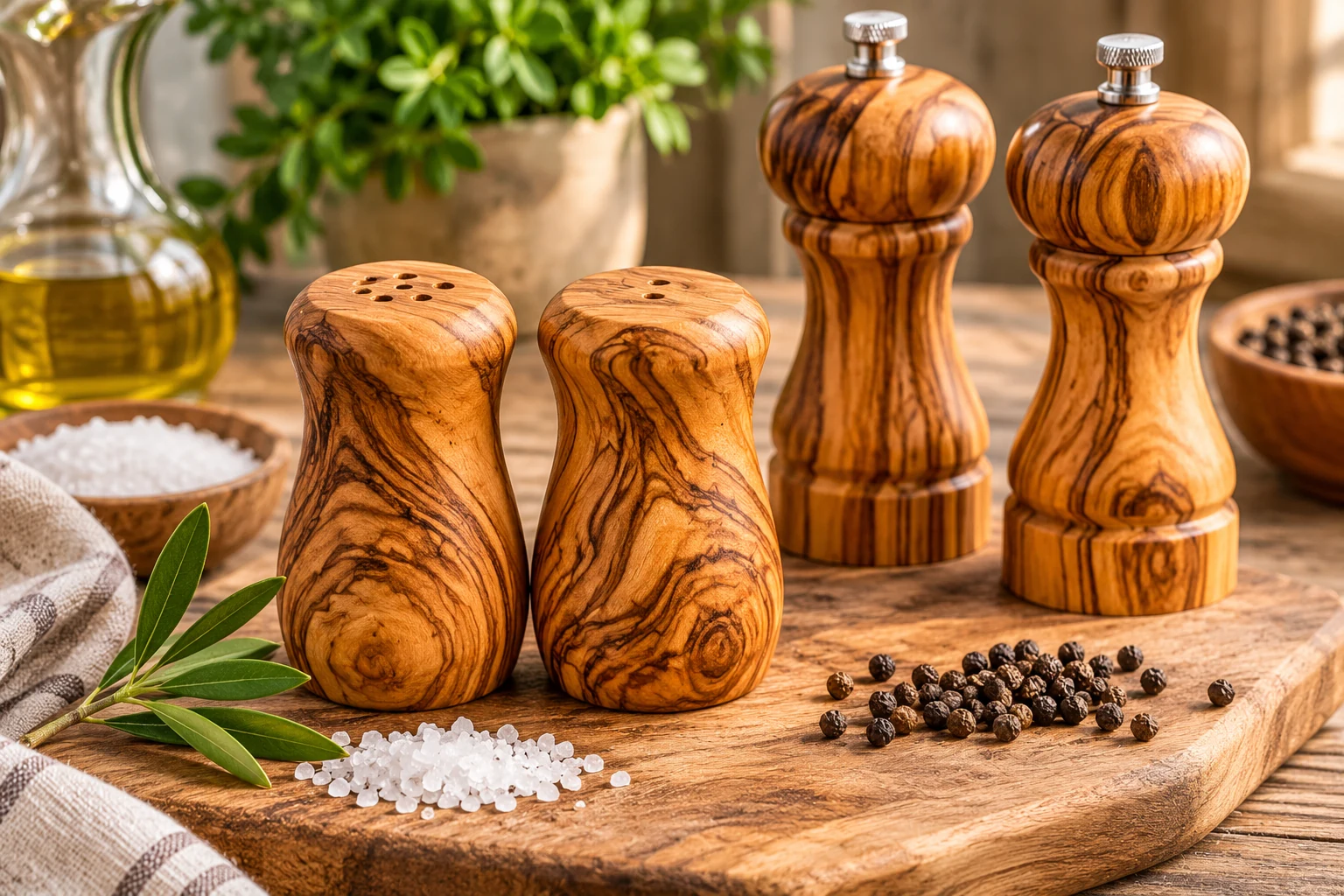
Shakers vs Grinders: Which Belongs on Your Table?
November 14, 2026 · By Lonivera
Shakers offer easy everyday seasoning; grinders bring freshly cracked flavor. Here’s how to choose the right salt and pepper setup for your table.
A good salt and pepper setup should make dinner easier, not turn seasoning into a project. When weighing shakers vs grinders, the best choice comes down to flavor, ease of use, and how you like your table to feel. Both have a place—and salt and pepper don’t necessarily need matching dispensers.
Shakers vs Grinders: The Everyday Difference
Shakers dispense seasoning that is already fine enough to pass through small holes. Grinders, also called mills, crush whole peppercorns or suitable salt crystals as you turn or operate a mechanism.
That difference affects more than appearance. A shaker delivers ready-to-use seasoning quickly, while a grinder adds freshly crushed texture and, with pepper, a more immediate aroma.
When shakers make sense
Shakers suit tables where convenience comes first. Guests can add a little seasoning without adjusting a mechanism, and the familiar shake-and-taste routine works well for everyday meals.
They also offer a simple, uncluttered look. If that sounds like your style, Lonivera’s Elegant Salt and Pepper Shakers are a natural starting point for your table setup.
When grinders make sense
Grinders are useful when you want freshly cracked pepper or more control over particle size. Many mills offer adjustable settings, though the range and adjustment method vary by model.
A fine grind blends into eggs or soup more readily. A coarse grind leaves distinct flecks and a noticeable bite on salads, roasted vegetables, or pasta. If you enjoy making those small adjustments, a grinder earns its place.
Flavor: Pepper Benefits More Than Salt
Salt and pepper often travel as a pair, but they behave differently. Understanding that distinction makes the choice much simpler.
Freshly ground pepper has an aromatic advantage
Whole peppercorns hold aromatic compounds inside their structure. Grinding releases those aromas, which gradually fade as ground pepper sits exposed to air.
That is why freshly cracked pepper often smells more vivid than pepper that was ground well in advance. The difference is especially noticeable when pepper is added just before eating, rather than buried among stronger flavors.
Preground pepper is still practical. For someone who wants a familiar, mild sprinkle with minimal effort, a shaker does the job. Buy manageable amounts and keep the supply tightly closed in a cool, dry place.
Grinding salt changes texture, not freshness
Salt does not gain fresh aroma from grinding the way pepper does. A salt mill mainly changes the size of the crystals and how they spread across food.
Fine salt disperses readily, while larger grains can give occasional crunchy bursts. Neither format automatically makes salt better; the useful question is whether you want that texture control at the table.
For many households, a salt shaker paired with a pepper grinder is a sensible combination. You get straightforward salt dispensing and fresh pepper without adding a second grinding step.
Convenience, Control, and Comfort
The best dispenser is one everyone at the table can use comfortably. A beautiful piece becomes less useful if it is difficult to grip, refill, or operate.
Before choosing, think through a few everyday details:
- Ease of handling: A lightweight shaker may be easier for some people, while others prefer the action of a particular mill. Grip and dexterity matter more than appearance.
- Seasoning flow: Shaker holes and salt grain size need to work together. Very fine seasoning can pour quickly; larger crystals may not pass through.
- Grind adjustment: If texture matters to you, look for a mill with clearly explained settings.
- Refilling: Consider how the container opens and whether you can fill it without spilling.
- Cleaning access: Removable parts and the manufacturer’s care instructions should guide your maintenance routine.
Neither format guarantees perfect portion control. Start with a small amount, taste, and add more. When trying an unfamiliar dispenser, dispense a little into a clean spoon first to see how quickly it flows.
Also check what a grinder is designed to hold. Salt can corrode mechanisms not intended for it, so do not assume a pepper mill can double as a salt mill. Use only the seasoning types recommended by its manufacturer.
Choosing a Setup That Fits Your Table
Your seasoning pieces should suit the way you actually eat. A quiet weekday breakfast, a shared lunch, and a leisurely dinner may call for different priorities.
For quick everyday meals
Choose shakers if you want fast, familiar seasoning with little fuss. Keep them within easy reach, but away from splashes and cooking steam, which can introduce moisture and encourage clumping.
A matching pair can help a small table feel orderly. Olive wood adds warm color and distinctive grain without needing elaborate decoration around it.
For flavor-focused dining
Choose a pepper grinder if finishing dishes with aromatic pepper is part of your routine. Pair it with either a salt shaker or a suitable salt mill, depending on whether salt texture matters to you.
There is no rule that both pieces must use the same mechanism. A coordinated material or simple silhouette can make a mixed setup feel intentional.
For relaxed entertaining
Aim for a table that invites people to help themselves. Seasoning should be easy to identify and reach, rather than hidden behind a centerpiece.
Wooden accessories can tie the setting together. A Rustic Olive Wood Serving Board provides a complementary surface for serving bread or a shared spread, while keeping the overall mood relaxed. Let the grain provide visual interest and give each piece enough space to be useful.
Caring for Shakers, Grinders, and Olive Wood
A little routine care helps keep seasoning containers clean and wooden surfaces looking their best. Always follow the product’s specific instructions, particularly where a grinding mechanism is involved.
For washable olive-wood pieces, hand wash briefly with mild soap and water, then dry promptly. Never put them in the dishwasher or leave them soaking. Before refilling a container, allow its interior to dry completely; trapped moisture can cause seasoning to clump.
Do not immerse a grinder mechanism unless its manufacturer specifically permits it. Many mechanisms need dry cleaning rather than washing. A soft, dry brush may help remove residue from accessible areas when recommended.
When the wood looks dry, apply a light coat of food-safe mineral oil or another oil specifically intended for wooden kitchenware. Wipe away excess and avoid getting oil into dispensing holes or grinding parts. Ordinary cooking oils are not the best choice because some can become rancid.
Store refills away from heat and humidity, and avoid topping up a damp container. Keeping seasoning dry is more useful than trying improvised fixes for repeated clumping.
FAQ
Are grinders always better than salt and pepper shakers?
No. Pepper grinders offer fresh aroma and often adjustable texture, but shakers are convenient and familiar. For salt, the main difference is grain size and dispensing style, not freshness. Choose according to how you season food.
Can I use a salt shaker with a pepper grinder?
Absolutely. It is a practical combination that gives you easy salt dispensing and freshly ground pepper. Matching materials or complementary shapes can help the two pieces look cohesive without requiring identical functions.
How do I keep salt from clumping in a shaker?
Keep the shaker away from steam, refill it only when completely dry, and store extra salt in a tightly closed container. Use a grain size suited to the openings. If clumping persists, check for trapped moisture before refilling.
For a simple, welcoming everyday setup, explore Lonivera’s Elegant Salt and Pepper Shakers and make room for easy seasoning at your table.