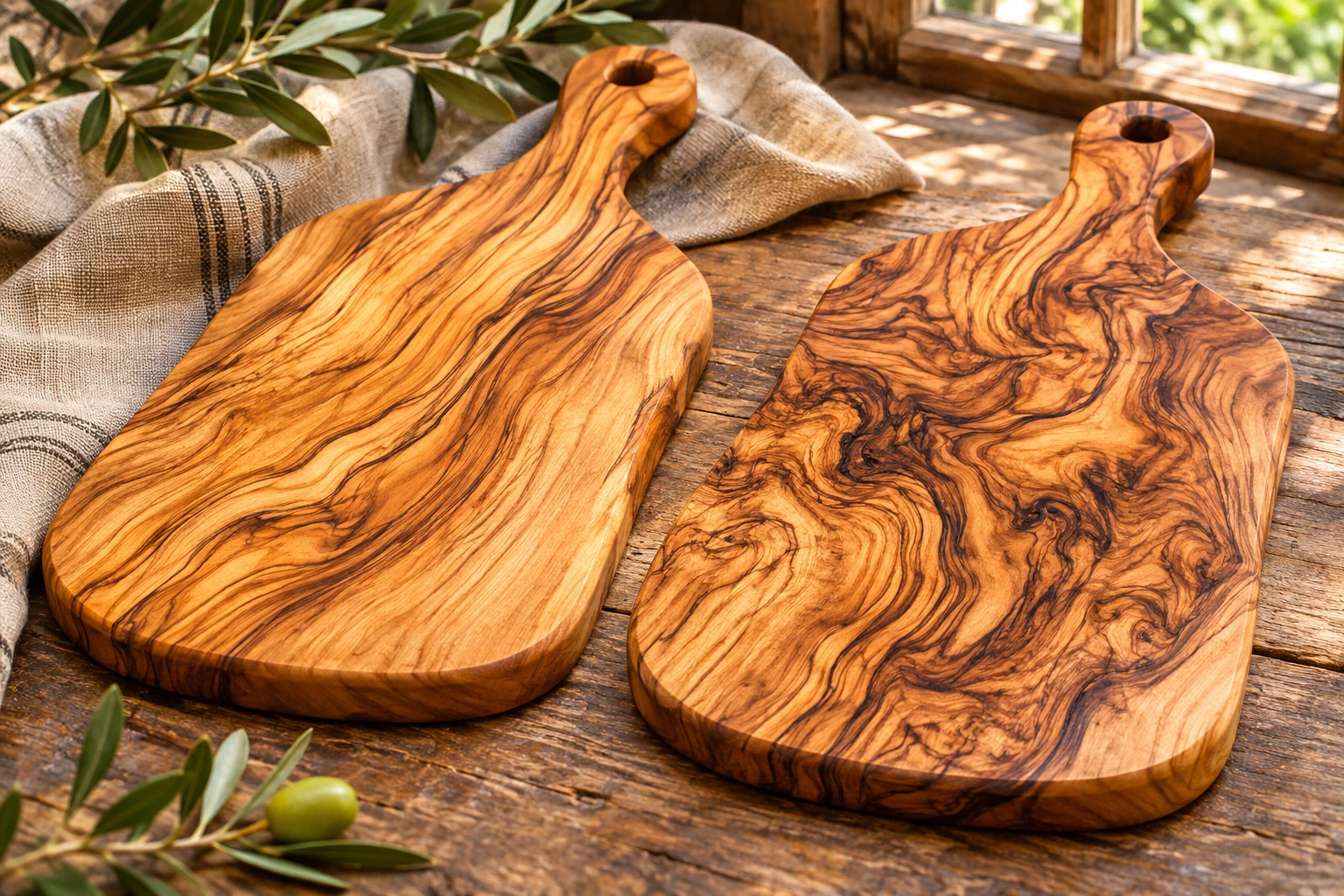
Why Olive Wood Grain Makes Every Serving Board Different
November 1, 2026 · By Lonivera
Swirls, dark ribbons, and warm color shifts give olive wood serving boards their character. Discover how these patterns form and how to keep them looking beautiful.
Set two olive wood serving boards side by side, and you may notice their differences before their similarities. Olive wood grain can run in long, flowing lines on one board and gather into tight curves on another, giving each piece its own visual character. Those patterns come from the tree itself, while the way the wood is cut and finished determines what you see at the table.
What Gives Olive Wood Grain Its Character?
Wood grain describes the direction and arrangement of a tree’s wood fibers. In everyday conversation, we also use the word to describe the visible lines, swirls, and contrasting bands across a wooden surface. Together, these details create the pattern that makes olive wood so recognizable.
Olive wood often combines a warm, pale background with darker brown streaks. Some pieces look softly striped; others show dramatic waves, branching lines, or small areas of swirling figure. The contrast can vary even within a single piece of wood.
These patterns are not printed or applied as decoration. They reflect the tree’s structure and growth. Branch junctions, changes in growth direction, and the location of a piece within the trunk or branch all influence its appearance.
That is why two boards made from the same species—and even the same tree—can look noticeably different. They reveal different sections of a complex natural material rather than repeated versions of a fixed design.
Why No Two Serving Boards Look Exactly Alike
A finished board’s appearance comes from several things working together: the wood selected, the angle of the cut, and the maker’s decisions about shape and surface preparation.
Every section reveals a different pattern
Wood near a branch junction may have more curved or interlocking grain than another section. A cut through one area might reveal broad, sweeping lines, while a nearby cut shows smaller, more concentrated patterns.
The direction of the cut matters, too. Think of slicing a patterned loaf from different angles: the underlying structure stays the same, but each exposed surface shows it differently. Wood is more complex, yet the principle is similar.
Shape changes how you see the wood
A long serving board can emphasize flowing grain, drawing the eye from one end to the other. A broader surface may reveal more of a curved pattern or a transition between pale and dark areas.
Handmade shaping adds another layer of variation. Where the maker places an edge or rounds a corner affects which parts of the pattern remain visible. The result is a relationship between natural material and practical design, not just a decorative surface.
Finishing brings the pattern into focus
Sanding smooths the surface, while an appropriate food-safe finish can deepen the wood’s color and make contrasts more apparent. Finishing reveals the existing figure; it does not make separate pieces identical.
A product photograph can therefore help you understand a board’s general style without predicting every line on the piece you receive. Unless a listing explicitly shows the exact item for sale, expect natural variation.
Choosing a Board for Your Table
There is no single “best” grain pattern. A quieter board can feel understated, while strong dark ribbons make the wood a more prominent part of the table setting. Neither appearance alone tells you how well a board will serve your needs.
Start with how you plan to use it, then consider the visual character you enjoy. Lonivera’s Rustic Olive Wood Serving Board is a natural place to explore this combination of serving function and distinctive wood pattern.
When browsing, look at these details:
- Overall contrast: Do you prefer subtle lines or bold dark streaks?
- Pattern movement: Long lines feel different from clustered curves and swirls.
- Usable surface: Consider whether the shape suits the foods you usually serve.
- Surface condition: Look for a smooth working area, and ask about any visible openings or cracks.
- Listing details: Check whether photographs are representative or show the exact board available.
A dark line is not automatically a crack, and a dramatic pattern is not automatically a flaw. However, visible splits, loose material, or openings that could trap food deserve attention. Natural variation should add character without compromising a usable serving surface.
Let the Grain Become Part of the Presentation
An olive wood board does not need elaborate styling. Its warm colors and flowing lines already add interest, so leaving some wood visible can make a simple spread feel thoughtfully arranged.
Try grouping cheese, bread, and fruit in a few areas rather than covering the entire surface. A clear strip of grain between ingredients gives the eye somewhere to rest and keeps the board itself part of the presentation.
Use small dishes for oily dips, wet foods, or ingredients likely to leave stains. This also makes serving and cleanup easier. For hot dishes, use a suitable trivet rather than placing hot cookware directly on the wood.
If you enjoy a coordinated table, matching the material is usually enough; the patterns do not have to match. The Olive Wood Spoons & Spatulas Set can complement a serving board through shared warm tones while retaining its own individual markings.
That slight variation is part of the appeal. A collection of olive wood pieces can feel related without looking uniform.
How to Care for the Wood’s Natural Beauty
Good care helps preserve both the surface and the appearance of your board. Wood responds to moisture, so the aim is to clean it promptly without leaving it wet for long periods.
Hand wash with mild dish soap and warm water, then rinse briefly. Dry with a clean towel and allow the board to air-dry fully with airflow around it before putting it away.
Never put an olive wood board in the dishwasher or leave it soaking in the sink. Avoid prolonged exposure to direct heat, which can encourage uneven drying and cracking.
When the surface looks dry or feels less smooth, apply a thin coat of food-safe oil intended for wooden kitchenware, such as food-grade mineral oil. Follow the oil’s instructions and wipe away excess. Ordinary cooking oils are not a reliable substitute because some can turn rancid.
Oil may make the grain look richer, but it does not repair cracks or make wood waterproof. Gentle cleaning, thorough drying, and sensible storage remain the foundation of care.
Frequently Asked Questions
Will my serving board look exactly like the product photo?
Not necessarily. Unless the listing identifies the photographed board as the exact item being sold, expect differences in color, streaks, and grain direction. Use the images as a guide to the overall style, and ask the shop if a particular appearance matters to you.
Does darker grain mean better-quality olive wood?
No. Strong contrast is a visual characteristic, not a quality grade by itself. A subtly patterned board can be just as appealing and useful. Pay attention to surface condition, sound construction, and suitability for your intended use rather than choosing by darkness alone.
Will the grain change over time?
The underlying pattern remains, but its appearance can shift with light exposure, use, and surface condition. Oiling often makes colors look deeper, while a dry surface may look duller. Regular care helps the wood retain its warmth without keeping it perfectly unchanged.
Bring natural character to your next gathering with Lonivera’s Rustic Olive Wood Serving Board, and let the wood be part of the presentation.