Wooden Chalice Care: Questions to Ask Before You Buy
November 1, 2026 · By Lonivera
Buying a wooden chalice? Ask about intended use, finishes, cleaning, and storage so you can choose an olive wood piece with confidence.
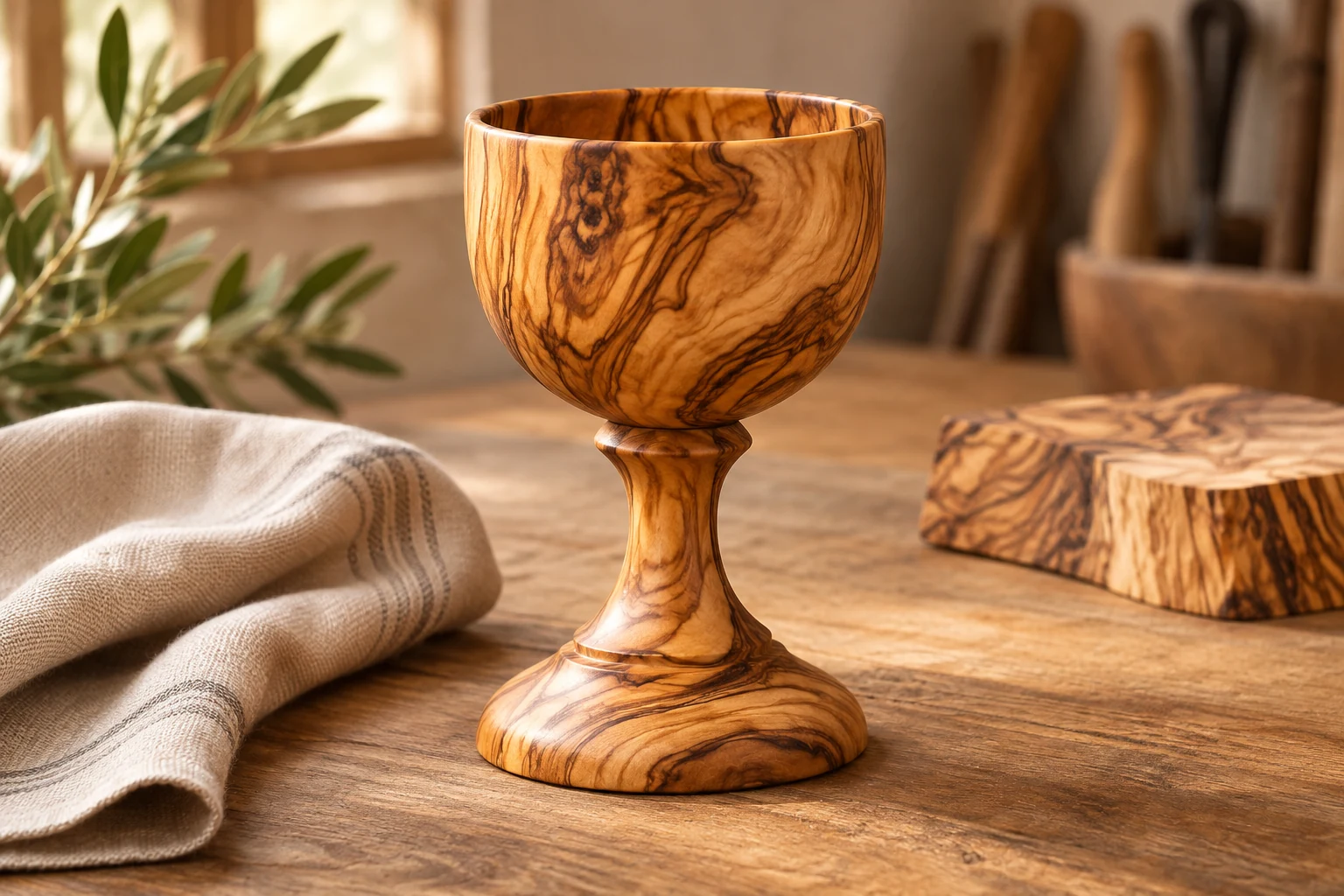
A wooden chalice brings natural grain and a warm, tactile feel to a meaningful object. Before choosing one, it helps to understand wooden chalice care—and to ask whether the piece is intended for display, ceremonial handling, or drinking. Those answers matter more than appearance alone.
1. Wooden Chalice Care Starts With Intended Use
The first question to ask is simple: What is this chalice designed to do? A decorative vessel and a drinking vessel may look similar, but their materials, construction, and finishes can differ.
Do not assume that a chalice is suitable for beverages because it has a cup-shaped bowl. Ask the seller to confirm whether the interior is intended for direct food or drink contact and which uses the maker recommends.
If you plan to use it in a religious service, also check your community’s requirements. Some traditions have specific rules about vessel materials, cleaning, and handling. A seller’s care instructions cannot establish whether a chalice is appropriate for a particular rite.
Useful questions include:
- Is this piece intended for display, drinking, or a specific ceremonial use?
- Is the interior suitable for repeated beverage contact?
- Which liquids, temperatures, and contact times are permitted?
- Does the chalice have a liner, coating, or exposed wood interior?
- Are written care instructions available before purchase?
When considering Lonivera’s Chalice and Paten Set Handmade from Olive Wood, use these questions to clarify how the set fits your plans rather than assuming a particular use from its name.
2. What Finish Is Used Inside and Outside?
A wooden chalice’s finish is central to its care. Ask what has been applied to the interior, rim, stem, and base, and whether those areas need different maintenance.
A general description such as “natural finish” is not enough to tell you how to clean the piece. Likewise, “food-safe” should be accompanied by guidance about intended contact: suitability for dry food does not automatically establish suitability for prolonged contact with wine or other liquids.
Ask about beverage compatibility
If drinking use is confirmed, ask specifically about the beverages you expect to serve. Alcohol, acidity, and heat can affect some finishes, so approval for cool water should not be treated as approval for every drink.
Do not test an uncertain finish by filling the chalice and leaving it overnight. That creates prolonged moisture exposure without reliably establishing safety or durability.
Ask how the finish is maintained
Some exposed wood surfaces benefit from occasional oiling; others have a coating that should not be oiled. Ask the maker which treatment is appropriate and whether refinishing requires professional attention.
Avoid adding a household varnish, craft sealant, or unidentified oil to make a decorative chalice usable for drinking. A home-applied coating is not a substitute for confirmed beverage suitability.
3. How Should You Wash and Dry It?
For a wooden chalice confirmed as washable, routine care should be gentle and brief. Hand washing, prompt drying, and avoiding prolonged moisture exposure are the essential habits.
Ask whether any part requires special handling, especially if the piece includes a liner, joints, or decorative details. A fitted component may have separate cleaning instructions.
A standard routine for washable wooden surfaces is:
- Wash by hand with mild dish soap, lukewarm water, and a soft cloth or sponge.
- Clean promptly after use rather than leaving residue to dry inside.
- Rinse briefly without soaking the chalice.
- Towel-dry immediately, including the rim, stem, and base.
- Let it finish air-drying with good airflow before storing it.
Never put a wooden chalice in the dishwasher or leave it soaking in a sink. Heat, strong detergents, and extended water exposure can damage wood or its finish. Avoid abrasive pads and do not use a radiator, oven, or hair dryer to speed drying.
These gentle habits also apply broadly to wooden kitchenware, including a Rustic Olive Wood Serving Board, although each item’s finish and intended use should guide its maintenance.
For shared drinking use, ask how the chalice can be cleaned to meet applicable hygiene requirements. If a required sanitizing method conflicts with the maker’s instructions, choose a vessel designed for that process.
4. Does It Need Oil, and Which Kind?
Oiling is not a universal instruction for every wooden chalice. Before buying, ask whether the wood should be oiled, which surfaces can be treated, and what product the maker recommends.
For exposed wood that the maker says to oil, use a food-safe oil suitable for wooden food-contact items. Food-grade mineral oil is a common option, but follow the recommended treatment for the specific finish. Ordinary cooking oils are not a reliable substitute; some can turn rancid and develop unpleasant odors.
Apply a small amount to clean, completely dry wood, allow it to absorb as directed, and wipe away excess. Do not leave pooled oil inside the bowl or treat a lined interior unless instructed.
There is no single maintenance schedule that suits every chalice. Frequency depends on use, washing, storage conditions, and finish. Ask what signs indicate that treatment is needed rather than assuming monthly oiling is always appropriate.
Oil can help maintain suitable exposed wood, but it does not make a vessel waterproof, repair cracks, or establish that it is safe for drinking.
5. What Should You Check Before Storing or Using It?
Olive wood often has distinctive variations in grain and color. Those visual differences are part of its appeal, but they should not distract from checking the condition of surfaces you will handle or use.
Ask whether the chalice stands steadily, whether the rim is smooth, and how to report a defect. For a drinking vessel, clarify whether there are any repairs or filled areas in the beverage-contact surface and whether they are suitable for that use.
Store the chalice fully dry in a place with airflow, away from direct sunlight, heaters, and persistently damp conditions. Avoid sealing it in packaging while moisture remains inside the bowl.
Before each use, look for cracks, loose parts, peeling finish, or persistent odors. If any appear, stop using it for beverages and ask the maker for advice. Sanding or recoating the interior yourself could change the surface and its suitability for contact with drinks.
Frequently Asked Questions
Can a wooden chalice hold wine?
Only if the maker explicitly confirms that the chalice and its interior finish are suitable for wine. Ask about permitted contact time and cleaning afterward. Neither olive wood nor a general food-safe description alone establishes wine compatibility.
How often should I oil an olive wood chalice?
Follow the maker’s instructions for the specific finish. Oil only the surfaces approved for treatment, using the recommended food-safe oil. Coated or lined areas may not need oil at all, and extra oil will not prevent every form of wear.
Can I put a wooden chalice in the dishwasher?
No. Dishwasher heat, detergent, and prolonged moisture can harm wooden pieces. Hand wash washable surfaces gently, dry promptly, and allow airflow before storage. If your intended use requires dishwasher cleaning, a wooden chalice is not the right fit.
Choosing well starts with clear answers about use and care. Explore Lonivera’s olive wood chalice and paten set, and confirm the care details that matter for your intended use before you buy.