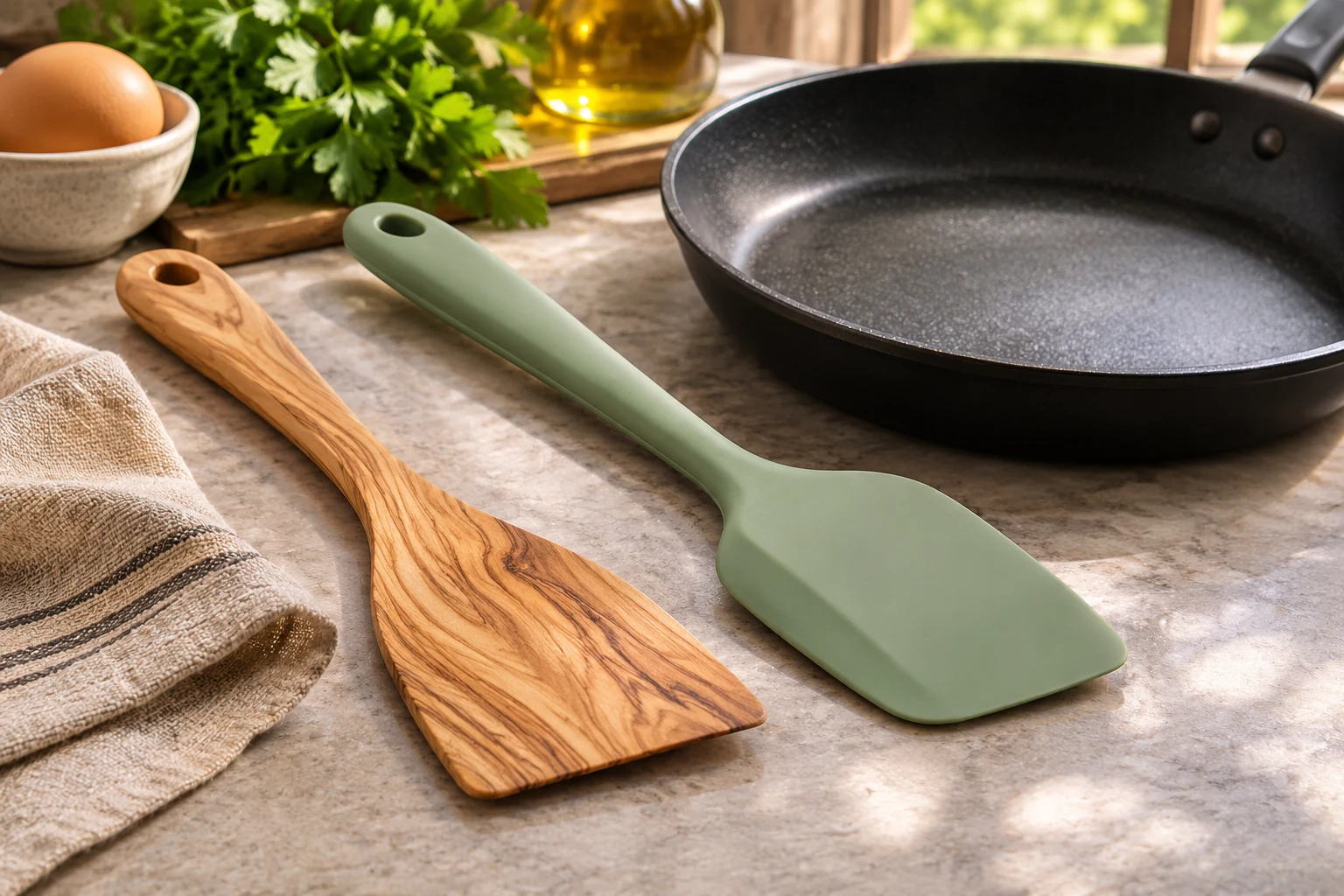
Wooden vs Silicone Spatula: Best for Nonstick Pans?
November 1, 2026 · By Lonivera
Both wood and silicone can work well with nonstick pans. Compare their feel, flexibility, care needs, and everyday uses to choose the right tool.
Choosing a wooden vs silicone spatula comes down to what you cook, how much flexibility you need, and how you like to care for your tools. Both can be suitable for nonstick pans when they are well made, undamaged, and used gently—but they shine at different jobs. Here’s how to choose without putting your pan’s coating at unnecessary risk.
Wooden vs Silicone Spatula: The Quick Answer
For delicate eggs, pancakes, and soft fish, a silicone turner is usually the easier choice. Its flexible edge can slide beneath food and follow the curve of a pan with little pressure.
For stirring vegetables, folding cooked grains, or moving thicker mixtures, a smooth wooden spatula offers reassuring firmness. It gives you more direct control than a very flexible silicone scraper.
A useful starting point is:
- Choose silicone if you prioritize flexibility, delicate turning, and scraping sauces from curved surfaces.
- Choose wood if you prefer a firm stirring tool, a natural feel, and utensils you are happy to hand wash.
- Choose both if your cooking includes everything from omelets to hearty vegetable dishes.
One distinction matters: “spatula” can mean a broad turner or a narrow mixing scraper. Shape often makes a bigger difference than material. A silicone baking scraper is not necessarily a good pancake turner, and a thick wooden paddle may struggle to get under a fragile egg.
Which Material Is Gentler on Nonstick Coatings?
Always check your cookware manufacturer’s utensil recommendations first. Nonstick surfaces vary, and no utensil is a guarantee against damage when used with excessive force.
Silicone: Soft Contact, With Some Caveats
A silicone head provides a soft contact surface, making it a forgiving option for many nonstick pans. Look for smooth edges and enough support to lift food without the head folding beneath it.
Some silicone utensils have a rigid internal core. That core should remain fully covered: if the silicone splits or wears through, stop using the utensil on your nonstick cookware. Also inspect joints and seams where food can collect.
Wood: Smoothness Matters
A well-finished wooden spatula can also be appropriate for nonstick cooking. The important details are rounded corners, a smooth working edge, and freedom from splinters or cracks.
Wood is firmer than silicone, so technique matters. Stir and lift gently rather than digging an edge into the coating. If food is stuck, do not try to chisel it away with either material; let the pan cool and clean it according to its care instructions.
Before cooking, check that the utensil is clean and free from hard, dried-on residue. Even a suitable tool deserves a quick inspection.
How They Perform in Everyday Cooking
Think about the meals you make most often rather than searching for one material that wins every task.
Eggs, Pancakes, and Delicate Food
A thin silicone turner with a supported head is often the better match for fried eggs and pancakes. A broad blade supports the food, while a flexible edge helps you get underneath it.
For scrambled eggs, a silicone scraper can sweep soft curds away from the sides of the pan. A smooth wooden spatula also works, but it will not conform to the pan as closely.
Vegetables, Grains, and Thick Mixtures
Wood comes into its own when you want a firm tool for stirring and folding. A wooden spatula can move vegetables around the pan or fold rice into a sauce without bending significantly.
Silicone can handle these tasks too, provided the tool has enough structure. Very soft heads may feel less controlled when moving a dense mixture, so judge the utensil’s firmness rather than assuming all silicone tools behave alike.
If you favor firm stirring tools, Lonivera’s Olive Wood Spoons & Spatulas Set is an option to explore for your kitchen. Choose the utensil shape that suits the task, and follow your pan’s guidance on suitable materials.
Sauces and Getting the Last Spoonful
Silicone generally has the advantage when you want to gather sauce from curved sides or transfer a mixture with less left behind. Its flexibility helps maintain contact with the surface.
Wood offers a different benefit: clear, steady feedback through the handle. Some cooks prefer that firm feel for everyday stirring, even if it leaves a little more sauce behind.
Heat, Durability, and What to Check Before Buying
Neither material should be treated as indestructible. Keep utensils away from open flames, and do not leave them resting against a hot pan rim or sitting in an unattended pan.
For silicone, look for a stated heat rating and confirmation that the utensil is intended for food contact and stovetop use. Ratings differ between products, so avoid assuming that every silicone spatula can tolerate the same conditions.
Wood does not soften like a flexible polymer, but it can scorch, crack, or deteriorate through misuse. It is a cooking utensil, not a tool to leave exposed to prolonged heat.
Before buying, consider:
- Blade shape: Broad for turning; narrower for stirring.
- Edge finish: Smooth and rounded, without rough spots.
- Support: Flexible enough for the job, but firm enough to lift food.
- Handle comfort: Comfortable to grip and control.
- Construction: No loose joints, damaged seams, or exposed cores.
- Care requirements: Instructions you can realistically follow.
Avoid choosing on appearance alone. Olive wood’s distinctive grain is appealing, but comfort, condition, and the working edge matter more when protecting a nonstick surface.
Cleaning and Caring for Your Spatulas
Wood needs a simple, consistent care routine. Hand wash with mild dish soap and warm water, rinse, towel dry, and let it finish air-drying before storage. Never soak wooden utensils or put them in the dishwasher.
When the wood starts to look dry, apply a light coat of food-safe oil intended for wooden kitchenware, such as food-grade mineral oil. Follow the oil’s instructions and wipe away excess. Oiling helps maintain the wood; it does not repair cracks or make a damaged utensil safe to use.
For silicone, hand washing with warm, soapy water is a straightforward approach. Pay attention to seams and removable parts, following the manufacturer’s cleaning instructions. Dry thoroughly before storing.
Replace silicone utensils with torn heads or exposed cores. Stop using wooden utensils that develop splinters, substantial cracks, or rough working edges, especially on nonstick cookware.
Frequently Asked Questions
Can a wooden spatula scratch a nonstick pan?
It can if it has rough edges, splinters, or hard residue, or if you press too aggressively. A smooth wooden spatula used gently is suitable for many nonstick pans, but your cookware manufacturer’s guidance comes first.
Is silicone always better than wood for nonstick cooking?
No. Silicone usually offers softer contact and more flexibility, while wood provides firmer control for stirring. The best choice depends on the task, utensil design, and condition of both the tool and pan.
Should I buy one spatula or keep both materials?
If you mostly cook eggs and pancakes, start with a well-supported silicone turner. If you mostly stir vegetables, grains, and sauces, a smooth wooden spatula may suit you better. Keeping both gives you a practical tool for each kind of cooking.
Prefer the feel of natural wood? Explore Lonivera’s Olive Wood Spoons & Spatulas Set for your everyday kitchen routine.